2016-2017 has been one of the craziest years in my teaching career. My principal texted me last July to ask me to teach Personal Financial Responsibility, a course encouraged, but not required, for high school students by the state of Indiana. I accepted the challenge and immediately delved into learning as much as I could to help my students. Nearly a year later, after teaching two sections of the course, I have learned a great deal about finance and about myself. In this article, I would like to share with you what I have learned this year.
Continue reading “10 Things I Learned From Teaching a Personal Finance Class”
The Case Against Emergency Funds
Most financial advisors will probably tell you to establish an emergency savings account. I personally am a fan of the emergency fund strategy, but it is different for every person, depending on what kinds of risks they have in their lives. I talk with my finance classes about different types of risk we are exposed to:
- Concentration risk
- Income risk
- Inflation risk
- Interest rate risk
- Liquidity risk
- Personal risk
Emergency savings can help with some of these risks, like a medical emergency or job loss, but they lose buying power to inflation, and they have an opportunity cost. The question is which of the risk factors above carries the most weight for you. If you work in a highly volatile industry, income risk may be a major concern. If you are a contracted teacher like me, maybe not so much. This is why it is important to “play devil’s advocate” and make arguments against conventional wisdom in finance. Let’s examine the argument against establishing the infamous emergency savings account. Continue reading “The Case Against Emergency Funds”
Book Review: The World Is Flat
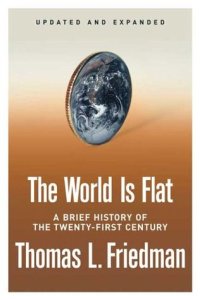 While it seems a little early to write a “history of the 21st century,” The World Is Flat is full of amazing insights that reshape the way we look at our world. What do the fall of the Berlin Wall, the Netscape IPO, and 9/11 all have in common? Thomas L. Friedman shows how these and other events are both causes and effects of the flattening of the world that has been on a fast track from 1989 to today.
There is no aspect of our lives that isn’t affected by the flattening trend. Most of these effects are good for us, but only if we understand them. 9/11 is an example of what happens when one group of people takes advantage of the flattening world for destructive purposes while another is unimaginative about its possibilities. The rise of eBay is an example of how a simple technology-based platform can open the business world to people who had previously been held back by geography, age, prejudice, or disability.
This book is an absolute must-read for every global citizen, whether they hold a political office, invest in emerging markets, or work on an assembly line. So many non-fiction books I read start off interesting and then become dull, as if the author had a great idea, but had trouble filling a few hundred pages with it. TWIF gets more and more interesting as you go, building up to a final chapter where Friedman offers a viable solution to create global peace, while simultaneously predicting the populist revolution that is happening today. It is clear that this book has not been read by enough people, and that needs to change!
Shorting Trump: A Starting Point
ABC News reported yesterday that President Trump contradicted 4 of his campaign positions in 1 day. It is not unusual for a politician to reverse some positions once the election is over, but the Trump administration’s progression since the election has been unusual, to say the least. After an impatient start that involved signing a record number of executive orders, Trump ran into a wall with his healthcare plans. Rather than try to climb the wall or find a door, he tried to break through it with his bare hands, but after hitting it a few times, he just gave up and walked away. Trump then reorganized his National Security Council, demoting his controversial advisor Steve Bannon. Now, I suspect that a lot of things he campaigned on are less likely to happen. Continue reading “Shorting Trump: A Starting Point”
 Econ4All