I am 3 days into the new Intro to Entrepreneurship class that I am teaching to 24 high school students this year. I am already having a blast, as the students—mostly freshmen—are very enthusiastic, despite several of them not being quite sure what entrepreneurship was 3 days ago. We started off by analyzing the etymology of the word entrepreneurship. Etymology is underrated as a tool for studying concepts like this. You get a peek into the cultural perspective of the time and place where the word was first invented. How cool is that?! Continue reading “Entrepreneurs: The New Adventurers”
Tag: books
Book Review: All About Asset Allocation
All About Asset Allocation is worth a read by every investor, even if you don’t buy into efficient-markets theory (EMT) or modern portfolio theory (MPT) and focus your investing on alternative strategies.
Richard A. Ferri uses tons of charts to help demonstrate the effectiveness of various kinds of diversification of the portfolio. He identifies the roles of various kinds of securities in the modern portfolio. He makes excellent cases for the importance of real estate exposure and international equities. He points out the weakness in the simplistic approach that many financial advisors take to investing in bonds.
Ferri demonstrates various strategies for hedging against inflation, interest rates, and other risks. He creates suggested allocation plans for investors at 4 different age levels and 3 different risk profiles. While I do not agree with all of Ferri’s theories and strategies, everything he advocates is research-based. His approach is appropriate for investors at any level, young or old, advanced or beginner. This is a great resource for anyone committed to meticulous portfolio management.
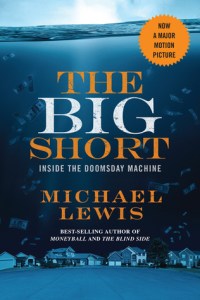
Book Review: The Big Short

The Big Short is more technical and more entertaining than I had expected. When it comes to coverage of the 2008 financial crisis, there are few in books or media who do an adequate job of explaining the mortgage-backed securities, collateralized debt obligations, credit default swaps, and other technical finance concepts involved. Michael Lewis manages to make sense of a complex system of debt speculation that the people who were responsible for understanding didn’t seem to understand. It is exactly what one might hope to get out of this book, but it’s not the thing that makes this book truly special.
What is really surprising about this book is its tone. Wall Street investors can be very brash. The investors covered by Lewis are outsiders. They share many characteristics with Wall Street stereotypes, but for various reasons they don’t fit in to those social circles. They are rogue investors, searching for any niche they can find, striving to be contrarian. They speak with a colorful vernacular; Lewis doesn’t bowdlerize. In fact, Lewis adopts a bit of the voice of his characters to better tell their story.
As the story progresses, the tone drastically changes. The events that unfold have huge implications for capitalism, democracy, and the history of the world going into a new century. Seeing how the men who predicted it profited from it and eventually reacted to it is what The Big Short is really about.
Book Review: The Inner Game of Tennis
Business Insider just published a piece about how this book guided the Golden State Warriors through their historic 2016-17 season. The piece shows a photograph of one of the best paragraphs of the book, which Tom Brady tweeted, showing where he wrote in the margin next to it. The Inner Game of Tennis: The Classic Guide to the Mental Side of Peak Performance has helped a lot of successful people get where they are today by focusing on a critical, but unemotional mindset.
I first read The Inner Game in the spring of 2004, at the end of a mostly unsuccessful freshman year in music school. The demand for hours of daily practice is one of the major reasons that people drop out of music school. Spending anywhere from 2 to 8 hours per day alone in a small room with your instrument, fighting to meet the standards of yourself and your professors, can quickly drive you insane. Continue reading “Book Review: The Inner Game of Tennis”